NIGHT LIFE
A new Nantucket nonprofit’s campaign to protect the island’s dark night skies.
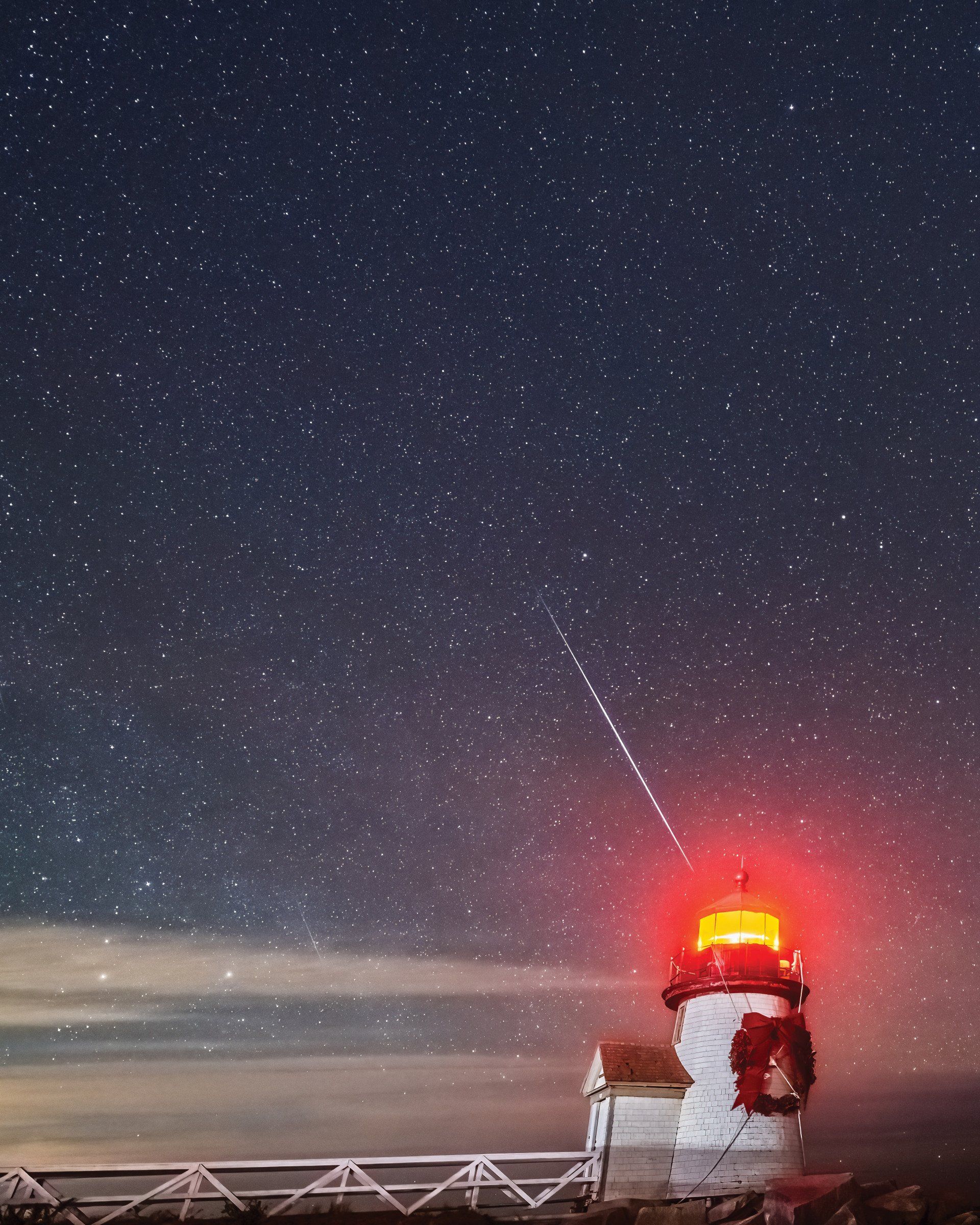
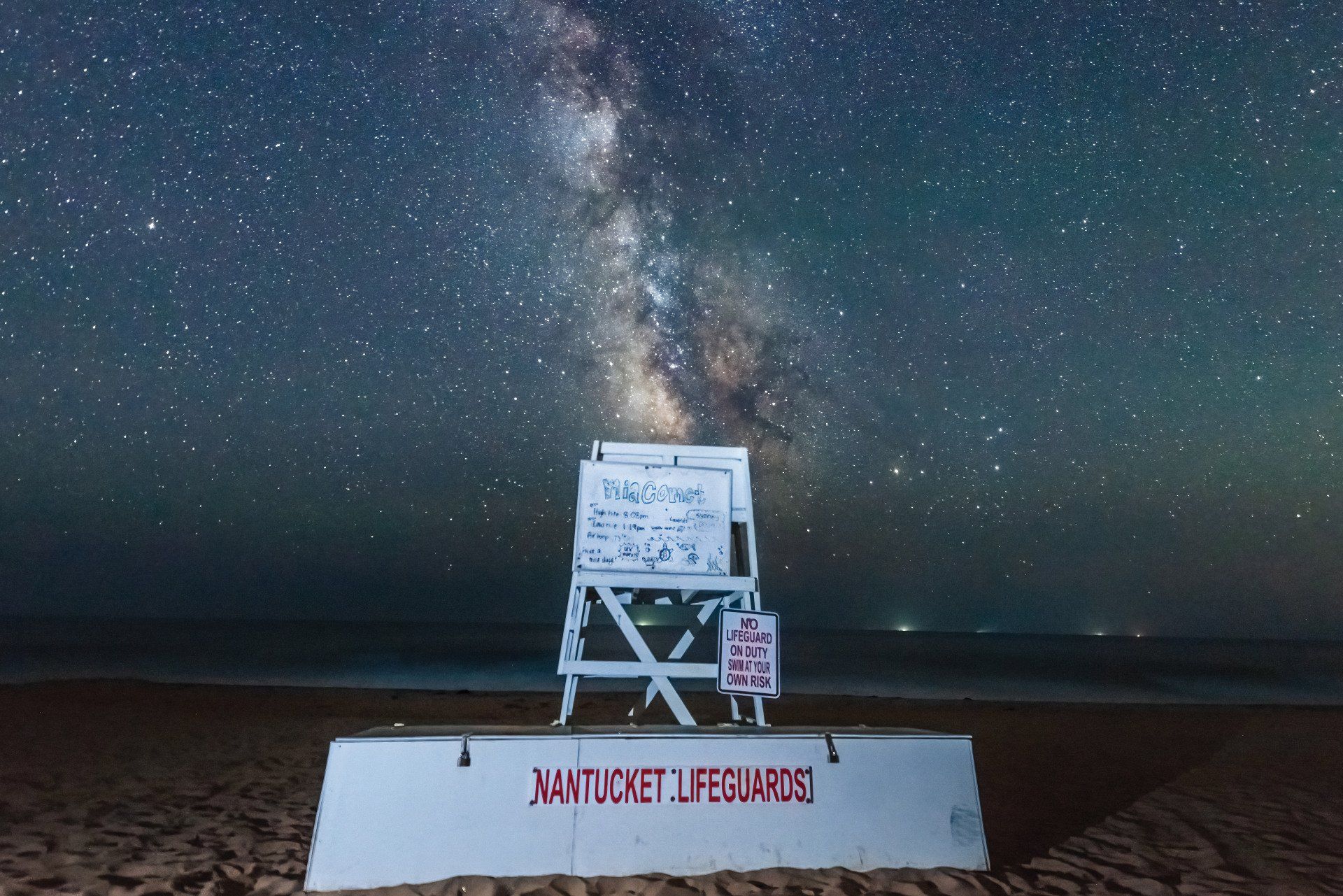
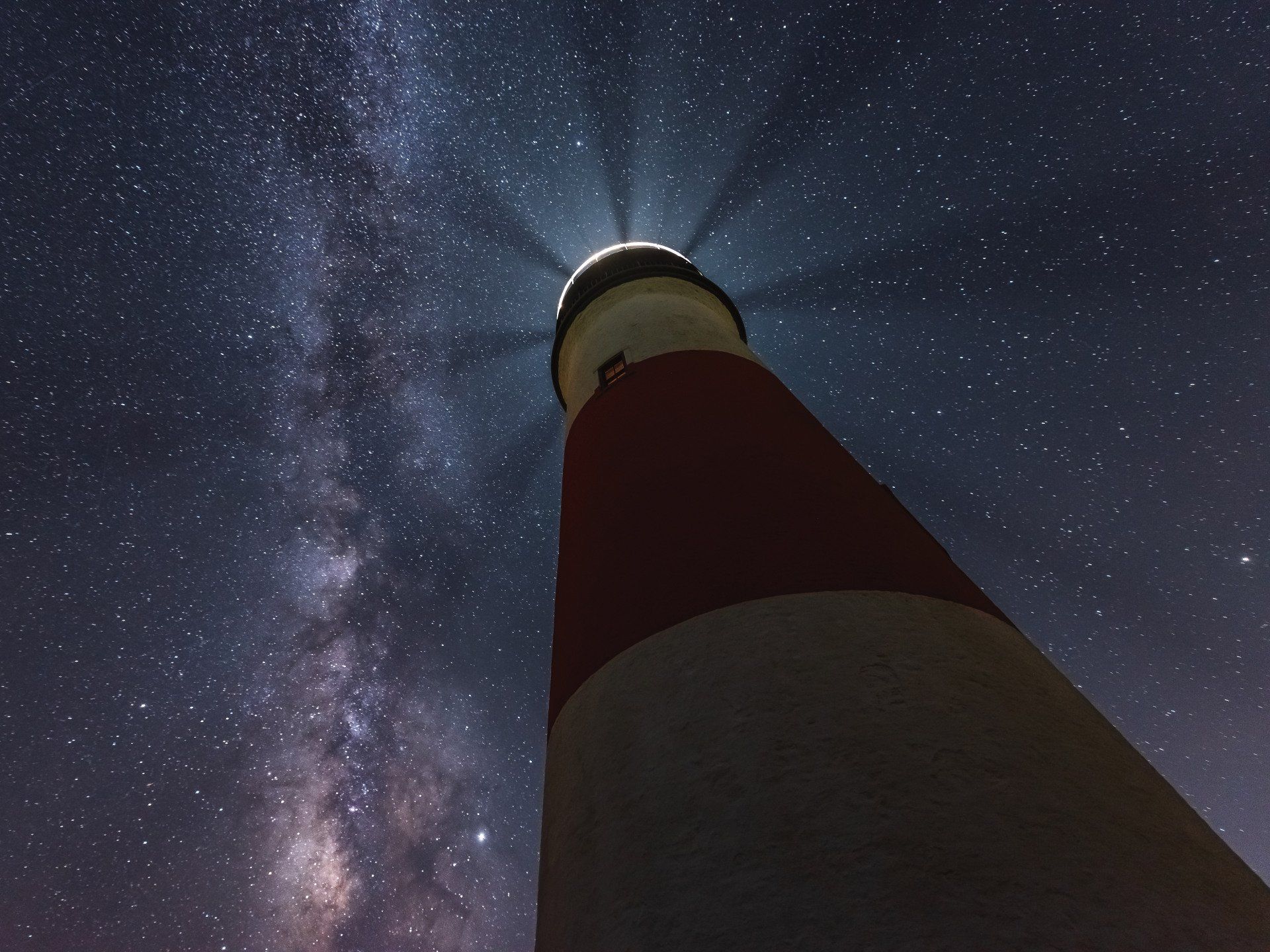
Nantucketers have always had a unique relationship with the night sky. From whalers navigating by the stars to Maria Mitchell identifying a comet, island history has been defined by the darkness above. However, according to the new island nonprofit Nantucket Lights, the island’s historically dark night sky is under threat from light pollution caused by both residential and municipal lighting. Over the last decade, satellite data shows that light pollution has increased by 24 percent on Nantucket. “Our heritage of dark skies—the ability to see the Milky Way, shooting stars and constellations—is slowly being eroded in many places on the island,” says Gail Walker, the founder of Nantucket Lights. “But quality stargazing isn’t the only thing at risk.”
Walker says that excessive artificial light at night takes a human toll by suppressing melatonin, which can throw off our circadian rhythm and increase the rate of deadly diseases. Harvard Medical School confirms this, with studies showing that nighttime light exposure may lead to increased rates of cancer, depression, diabetes, heart disease and obesity. Perhaps more predictably, the increase in artificial light can have devastating effects on wildlife, disrupting their feeding, migratory habits, mating and other natural cycles that contribute to the balance of the island ecosystem.
“My main concern is impacts on bat populations,” said Nantucket Conservation Foundation ecologist and field supervisor Danielle O’Dell, who also serves on Nantucket Lights’ steering committee. “We are one of the only places on the East Coast with healthy populations of northern long-eared bats, a federally threatened species that is likely to be upgraded to endangered soon.” O’Dell explained that increased light pollution makes it harder for these rare bat populations to navigate and feed at night, while also making them more vulnerable to predators such as owls as well as more likely to encounter humans. “While we’ve not had a case of rabies on Nantucket as far as I am aware,” O’Dell said, “increasing human/bat contact could be a public health concern.”
Bats are just one part of a long list of nocturnal species impacted by increased light pollution and its downstream effects on the island. “I worry most about insects and birds,” explained Dr. Sarah T. Bois, the director of research and education at the Linda Loring Nature Foundation and a member of the Nantucket Lights steering committee. “Birds and insects often use light cues for migration and can be misdirected with brightly lit buildings or other overly bright lights. Insects are especially worrying to me since they are the basis of our wildlife food chain. A lot of our favorite charismatic species rely on insect fauna.”
The impact of light pollution extends from land to sea, where some turtles and whales rely on the stars to navigate. Marine life aside, Nantucket boaters also depend on dark skies for safety. “We all know the story of the Iyanough hitting the jetty in Hyannis allegedly from mistaking background lights for navigation lights,” said Captain Blair Perkins of Shearwater Excursions. “It is a real problem, especially for small craft that may not have GPS units.” Captain Perkins says that Town Pier used to be equipped with lights shining directly out into the harbor, which were blinding boaters coming in to dock. “They finally replaced them with lights that face down,” he said. “Even floodlights on buildings present a problem, as do lights on some of the big yachts.”
The most recent flashpoint for the Nantucket Lights campaign has centered on Nantucket Public Schools. Immediately after launching the nonprofit, Walker was inundated with complaints about the lighting around Nantucket Elementary School. Walker and her team enlisted Keith Yancey of Lam Partners, an organization that specializes in lighting for college campuses and public buildings, to review the complaints surrounding the school. Yancey found that while Nantucket’s intermediate school and high school were mostly compliant with the town’s bylaws, Nantucket Elementary School’s illuminance levels were fifty-eight times higher than what was allowed according to Nantucket Code. “Not only is this lighting contributing to light pollution and light trespass,” Yancey wrote in his report, “it is also resulting in the expenditure of much more on electrical bills than necessary for safety and security.”
In February, Nantucket Public Schools took Yancey’s recommendation to reorientate the security lights to face downwards, but refused any other measures, such as installing dimmers, motion sensors and timers on security lights, as well as lowering the height of light posts that exceeded twelve feet. The school indicated that the lights had been updated in 2019 and not only matched the lights throughout the rest of campus, but were also saving the school upward of $3,300 a year. “For us this was a safety issue,” NPS Director of Facilities Diane O’Neil told N Magazine’s Nantucket Current. “In the colder months many teachers and staff leave the buildings well after dark. They were not feeling safe with the older lights. We are not supposed to shut off any outside lights due to other safety issues.”
When considering the importance of light around the schools, as with NPS, safety is often the common argument. Yet, in fact, increased lights might not actually deter crime. In 1997, the National Institute of Justice presented a report that found that not only does increased light not prevent crime, but it can actually encourage it. “The problematic relationship between lighting and crime increases when one considers that offenders need lighting to detect potential targets and low-risk situations,” the report stated. “We can have very little confidence that improved lighting prevents crime, particularly since we do not know if offenders use lighting to their advantage.”
In the midst of a global pandemic and the conflict in Ukraine, protecting our ability to see stars might seem like a flight of fancy to some, but the effort has gotten global attention, with editorials in the New York Times, Washington Post, Wall Street Journal and others documenting similar community efforts to preserve their skies. Here in Massachusetts, the Legislature is currently weighing two bills titled “An act to improve outdoor lighting, conserve energy, and increase dark-sky visibility,” which would give Walker and her organization more power to bring the island’s lights into code. To this end, Nantucket Lights has launched a campaign to have the island designated as an International Dark Sky Place. In joining the ranks of other communities around the world who have successfully reduced their artificial light to meet the parameters of the International Dark-Sky Association, Nantucket would be the first International Dark Sky Community east of the Mississippi River.
“Nantucket’s dark skies are a precious resource,” said Dr. Regina Jorgenson, the director of astronomy at the Maria Mitchell Association and member of the Nantucket Lights steering committee. “It’s not everywhere that one can look up and see the Milky Way stretch from one side of the sky to the other. Moreover, the night sky, particularly here on Nantucket, connects us with generations past—who used the night sky to navigate, or in the case of Maria Mitchell, to make great discoveries and explore the nature of our cosmos.”
Latest Stories